Canada’s prime minister says Russia not allowed at world juniors after 6 countries threaten boycott
With a Bachelor's in Business Administration from the University of Rochester, Marcus has spent over a decade covering local business trends and economic developments for WXXI News. His analytical approach has made him a go-to source for understanding local market dynamics.
More from Marcus →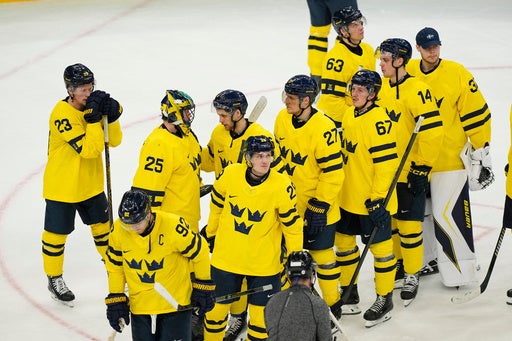
On a brisk Tuesday morning in Ottawa, Prime Minister Mark Carney stood resolute before the press, his voice steady and unwavering. He announced a decision that reverberated not only through the corridors of power in Canada but also across the globe: Russia would not be allowed to participate in the upcoming World Junior Hockey Championship. This statement came in the wake of growing discontent among several nations regarding Russia's ongoing military actions in Ukraine. As Carney spoke, the weight of history hung in the air, a stark reminder of how sports can intertwine with global politics.
What Happened
The World Junior Hockey Championship, set to take place in Alberta starting late December, has become a focal point for international tensions. Carney's announcement aligns with the decisions made by six European countries—Sweden, Finland, the Czech Republic, Norway, Latvia, and Denmark—who have collectively threatened to boycott matches against Russia as long as the war in Ukraine persists. This united front is not just a political statement; it reflects a deep-seated commitment to principles of justice and humanitarianism.
“While Russia and Belarus are supporting this illegal and unjustified horrific war in Ukraine, as long as that’s going on, there will be none of those athletes competing for their countries in Canada,” Carney asserted. His statement was met with immediate support from Hockey Canada, which expressed gratitude for the government's strong stance against the participation of Russian and Belarusian athletes under their national symbols.
The International Ice Hockey Federation (IIHF) had recently ruled that Russian teams must be reinstated, a decision that sparked outrage among many nations. The backdrop of this decision is the ongoing conflict that has seen Russia excluded from international sports since its full-scale invasion of Ukraine in 2022. As the IIHF and USA Hockey convene to discuss the implications, the future of the tournament hangs in the balance.
Community Reaction
The reaction from the hockey community has been swift and decisive. The Swedish Hockey Federation's announcement that it would not compete against Russia marked a significant shift in sentiment, especially after an initial indication that a boycott was off the table. Federation head Anders Larsson emphasized, “The Three Crowns will not play Russia in coming world championship tournaments.” This resolve illustrates the broader commitment of nations to stand against aggression and uphold the values of international sportsmanship.
Safety and Wellbeing Concerns
Norway's decision to boycott is particularly poignant, as it underscores concerns for the safety and wellbeing of players. The Norwegian Ice Hockey Association stated, “Our position is that Russia should be excluded from all international championships as long as the war in Ukraine continues.” This statement reflects a growing anxiety among players and families regarding potential security risks associated with competing against Russia. The mental health and personal safety of athletes must be a priority in any sporting context, especially amid such turbulent global circumstances.
Denmark and Latvia have also reaffirmed their longstanding positions against playing Russia, with the latter stating it would not engage in matches against Russia or Belarus. These collective actions are reminiscent of the solidarity seen in various sports following the onset of the war, where nations have banded together to express their disapproval of Russia's actions.
The Economic Stakes
The implications of these boycotts extend beyond the rink. Major sponsors are beginning to weigh in, with Finnish tire manufacturer Nokian Tyres announcing it would withdraw its sponsorship if Russia participates. “Under the current circumstances, continuing the sponsorship if Russia participates would not be aligned with our values,” said Tiina Frazer, the company's senior vice president. Such financial pressures could significantly impact the tournament's viability, forcing organizers to reconsider their options.
Swedish furniture maker AJ Products, a long-time tournament sponsor, echoed these sentiments, stating it would ask for its logo to be removed if Russia competes. The economic ramifications of these boycotts could reshape the landscape of international hockey, as sponsors align their business practices with ethical stances. The chief executive of Germany’s hockey federation has even hinted at the possibility of pulling out of hosting the championship altogether, citing concerns about costs and security.
Political and Cultural Context
The political backdrop to these decisions cannot be understated. The IIHF's ruling to reinstate Russian teams has drawn parallels to the sporting world’s response to past geopolitical conflicts. In 2022, FIFA faced similar challenges when all potential World Cup qualifying opponents of Russia threatened boycotts. The international sports community has often found itself at the intersection of politics and ethics, grappling with the implications of allowing nations to compete under contentious circumstances.
Moreover, the voices of political figures like Slovakia’s Prime Minister Robert Fico, who supports Russia's return to international sports, add another layer of complexity. His assertion that the value of a gold medal diminishes if not earned against the best, including Russian teams, reflects a divergent perspective that contrasts sharply with the sentiments of many nations committed to standing against aggression.
What's Next for International Hockey?
As the world watches, the future of the World Junior Hockey Championship hangs in the balance. With Canada firmly taking a stand, other nations are now evaluating their positions. Austria is currently weighing whether to join the boycott, while Germany remains uncertain about hosting the tournament. The ripple effects of these decisions could lead to a significant reconfiguration of the international hockey calendar.
As discussions unfold, the importance of community values and integrity in sports cannot be overstated. The commitment to uphold principles of justice and safety for athletes is paramount. The IIHF, USA Hockey, and Hockey Canada must navigate these turbulent waters with a keen awareness of the broader implications of their decisions.
In conclusion, as we approach the World Junior Hockey Championship, the stakes are higher than ever. This tournament is not just about hockey; it is a reflection of our collective values as a global community. The decisions made in the coming weeks will resonate far beyond the ice, shaping the future of international sports and the ethical standards we uphold.
Local Impact and Community Engagement
In Alberta, where the World Junior Hockey Championship is set to take place, the local community is bracing for a potential shift in the tournament's dynamics. Hockey is not just a sport here; it is deeply woven into the fabric of Canadian culture. Local businesses, from restaurants to hotels, are preparing for an influx of visitors, and many are now concerned about the implications of a boycott. The economic impact could be significant, affecting jobs and revenue streams that rely on the tournament's success.
Local hockey fans have also expressed their views on the matter. Many believe that the integrity of the sport should be upheld, and they support the decision to exclude Russia from the tournament. “Hockey is a sport that brings people together, and we cannot allow it to be used as a platform for political agendas,” said local fan and coach, Sarah Thompson. Her sentiments reflect a broader consensus among those who prioritize the spirit of the game over geopolitical considerations.
Looking Ahead
The coming weeks will be crucial as the IIHF and other governing bodies continue to navigate this complex situation. With the potential for further boycotts and the shifting landscape of international hockey, stakeholders at all levels must engage in dialogue to reach a resolution that respects both the integrity of the sport and the values of the global community. As the tournament date approaches, the world will be watching closely to see how these developments unfold, and what they mean for the future of sportsmanship on the international stage.